Transitions at Play, Toolkit, Sample poem to investigate transitions in the Deccan Plateau. Designed and written by Srivi Kalyan
AT A GLANCE

Email ID: srisrividhiya.k@manipal.edu
At the Centre for Reimagining Transitions (CRT), Srivi has acted as Centre Head, Course Leader, and Principal Investigator, working across visioning, curriculum design, research, and building a team of practitioner-researchers.Since 2019, she envisioned and developed an integrated PhD program in Reimagining Transitions, shaping its intellectual direction through framework building, curriculum design, and implementation.The Centre was established in 2021 under the larger vision of founder-director Dr. Geetha Narayanan. Since then, Srivi has led strategic visioning, team building, and the development of administrative and operational systems enabling a multi-PI research model.Collectively, the team has expanded the Centre’s intellectual and research horizons while maintaining a strong core coherence that enables the emergence of Transition Studies as a distinct and evolving field at SMI.
In addition, Srivi has helped strengthen the Centre’s national and international visibility, through outreach, collaborations, and network-building, alongside publications. To ensure alignment between the Centre’s long-term vision and its evolving academic, research, and institutional practices, she oversees the team’s research interests and directions
With a core focus on Consciousness and Well-being, Dr. Srivi’s work emerges across three interconnected domains within the Centre for Reimagining Transitions:Creative Practices in the Ecological Humanities,Education and Pedagogy,and Technology in a Transitioning World.This work situates transitions in consciousness within transition studies, framing them as essential epistemic–ontic transformations in ways of knowing, being, and relating.
She cross-pollinates these areas by working across artistic, pedagogical, and design practices, enabling transition studies to draw meaningfully from art and design as fields.
At CRT, her work centres on Transitions in Consciousness, examining how shifts in awareness, perception, and relational ethics create change in individual, collective, and ecological worlds. It explores how identity, imagination, and ethical sensibilities evolve in subtle ways, and through situated inquiries seeks to understand how they can catalyse broader systemic and societal transformations.
Srivi’s work is grounded in the domain of consciousness and well-being to locate shifts in how experience is perceived, embodied, and enacted.She examines how social, ecological, and cultural transitions emerge from shifts in awareness, imagination, and ethical responsibility.
This framework is developed through a practice-based/led, aesthetic, and philosophical approach that integrates textual, vernacular, and artistic traditions. She approaches Consciousness as plural, emergent, relational, and embodied, which allows her to explore personal transitions through lived experience, ethical values, and creative practices. Her research happens through situated engagements and lived contexts. She uses practice-based inquiry, autoethnographic reflection, and dialogic processes as methods to observe, map and analyse transitions in consciousness. She further traces these shifts through changes in narrative, relational engagement, and forms of action, primarily to look at the power of the individuals/collectives to impact transitions.
In addition to artistic and aesthetic inquiries, her approach uses design as a pivot for investigating and enacting transitions. She has developed transition-oriented toolkits that scaffold shifts in different contexts, enabling emergences of relational, pedagogical, and systemic possibilities. She approaches design as a generative practice through which new directions for transition can be imagined, prototyped, and refined. While artistic inquiry deepens perception and experience, offering subtle spaces for consciousness to alter, design allows her to extend these insights into frameworks and interventions that are scaffolded for real-world contexts.
In alignment with CRT’s ethos, the framework engages Indic, Asian, and other non-dominant knowledge traditions alongside contemporary global thought, in dialogic ways. This is intentional to rethink consciousness beyond reductive or universalist models, and allow for plurality, relationality, and lived experience, while seeing it as both a form of practice and a site of knowledge production.
Incorporating CRT frameworks in PhD guideship.
Incorporating CRT frameworks in Capstone Mentorship for IPhD students as supervisor and committee member.
Development of the IPhD Curriculum – Reimagining Transitions
Co-Developed with Padmini Nagaraja and Vidhu Gandhi – The SMI Civilizational Futures Framework
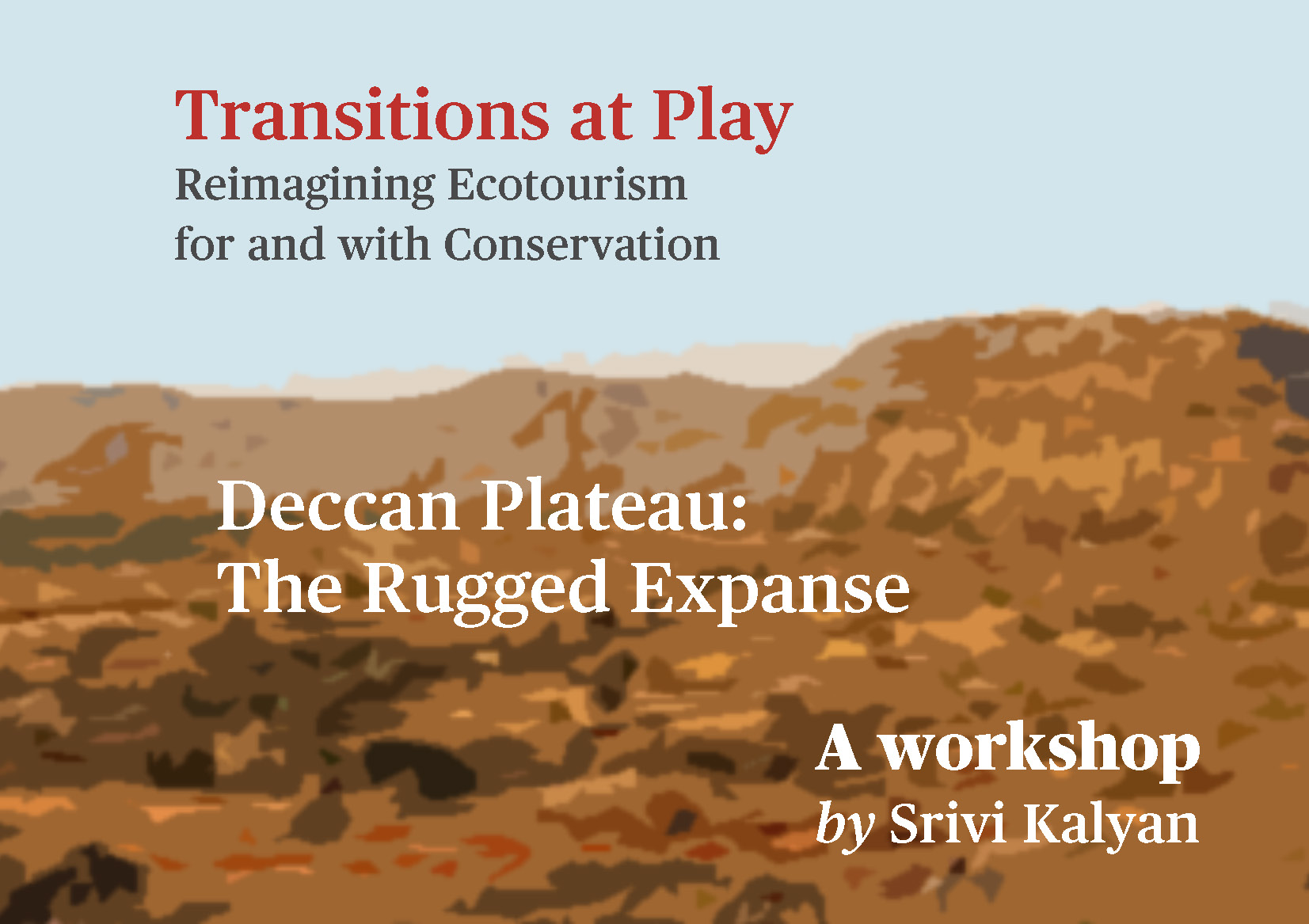
Transitions at Play : Reimagining Ecotourism for and with Conservation.
Joint project with Lila – Artist Research Studio, Production Support for development of toolkit – Jungle Lodges & Resorts
The Toolkit – Workshop Overview
IFS officers Training organized Jungle Lodges and Resorts,
February, September 2025
This workshop uses transitions as a framework to explore the intricate relationship between ecotourism and conservation. Through the creative lens of art and design, participants will engage with ecological, social, economic, political, and conceptual shifts, addressing complex conservation dilemmas. With practices such as deep time thinking, paradoxical reasoning, and metaphorical exploration, the session fosters aesthetic and creative consciousness. Together, we will craft new paradigms for ecotourism, harnessing the powerful insights that transitions offer as a guiding framework for a more harmonious relationship with conservation.
Humanising medical practices indigenous, interdependent and cross-cultural insights, Online International Symposium, National Institute of Advanced Studies, Consciousness Studies Program, Bangalore, July 2022
Presentation Title: Reflective healing through Art and Design
Panelist: Dr. Srisrividhya Kalyanasundaram
Transforming Consumption-Production Systems Toward Just and Sustainable Futures, a joint 5th SCORAI, 21st ERSCP, and Wageningen University Conference. https://www.scp-conference-2023.com/web, July 2023
Paper title: Between ‘Cosmic Order, Truth and Ethical Action’: Pedagogical inquiries as a philosophical quest into self, social and ecological consciousness.
Presenter: Dr. Srisrividhya Kalyanasundaram,
30th International Sustainable Development Research Society (ISDRS) conference on Linking Futures of Mountain and Ocean, June 2024, Kathmandu, Nepal
Paper title: Reimagining design for Sustainability: Biophilic design as a framework for documenting human-nature transitions in vernacular dwellings
Authors: Divyarajsinh Rana, Dr. Keya Chakraborty & Dr. Srisrividhya Kalyanasundaram
15th International Sustainability Transitions (IST) conference on Sustainability Transitions and Nature, June 2024, Oslo, Norway
Paper title: Reconnecting Humans with Nature: Reimagining traditional Indian art & architecture for sustainability transitions
Authors: Divyarajsinh Rana, Dr. Keya Chakraborty & Dr. Srisrividhya Kalyanasundaram
The 29th International Sustainable Development Research Society Conference(ISDRS), July 2023, University Kebangsaan, Malaysia
Paper title: A transition for sustainability: Through the craft of Kaudi
Presenters: Abhigna.B, Dr. Srisrividhya Kalyanasundaram
Reimagining Transitions: Beyond Established Methods and Concepts, July 2023, Leibniz Institute of Ecological, Urban and Regional Development. Dresden, Germany.
Paper title: Reimagining Architectural Transitions: More than human approach towards transitions in vernacular architecture
Presenters: Divyarajsinh Rana, Dr. Keya Chakraborty & Dr. Srisrividhya Kalyanasundaram
Paper title: Sounds of the Mridangam: Reimagining Transitions in Musical Traditions through Materiality and Consciousness
Presenters: Shree Sauparnika V, Dr. Srisrividhya Kalyanasundaram
Paper title: At the Edge of contemporization: Reimagining Sustainable Transitions in and through the quilting craft of Kaudi
Presenters: Abhigna.B, Dr. Srisrividhya Kalyanasundaram
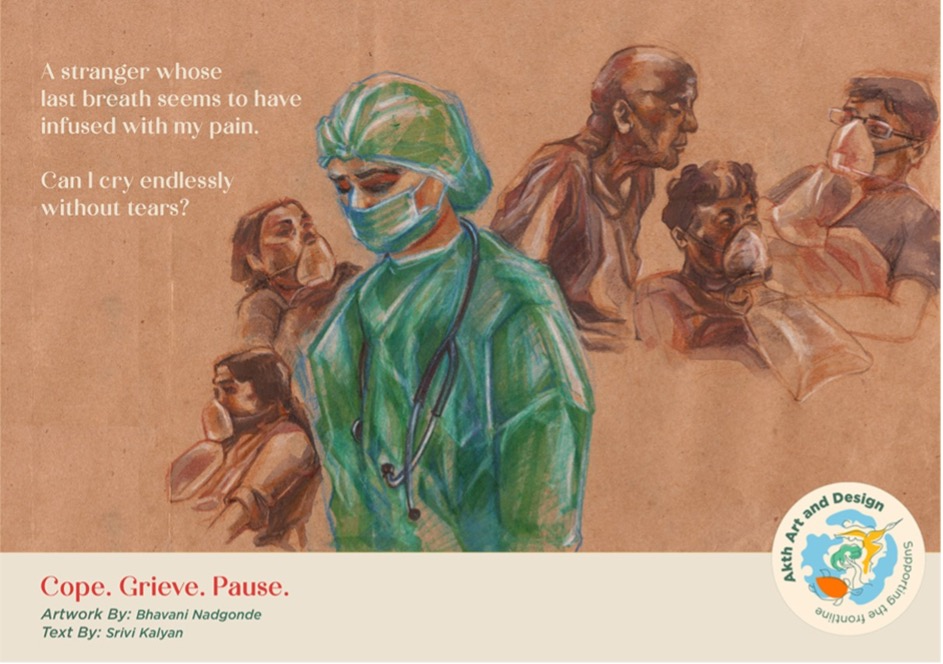
Past Project: Togetherness in Transitions: Reflective Healing Through Art & Design, Co-created website during Covid.
Divyarajsinh Rana and Jeena Mary Chacko, who are also Associate Researchers with the lab.