
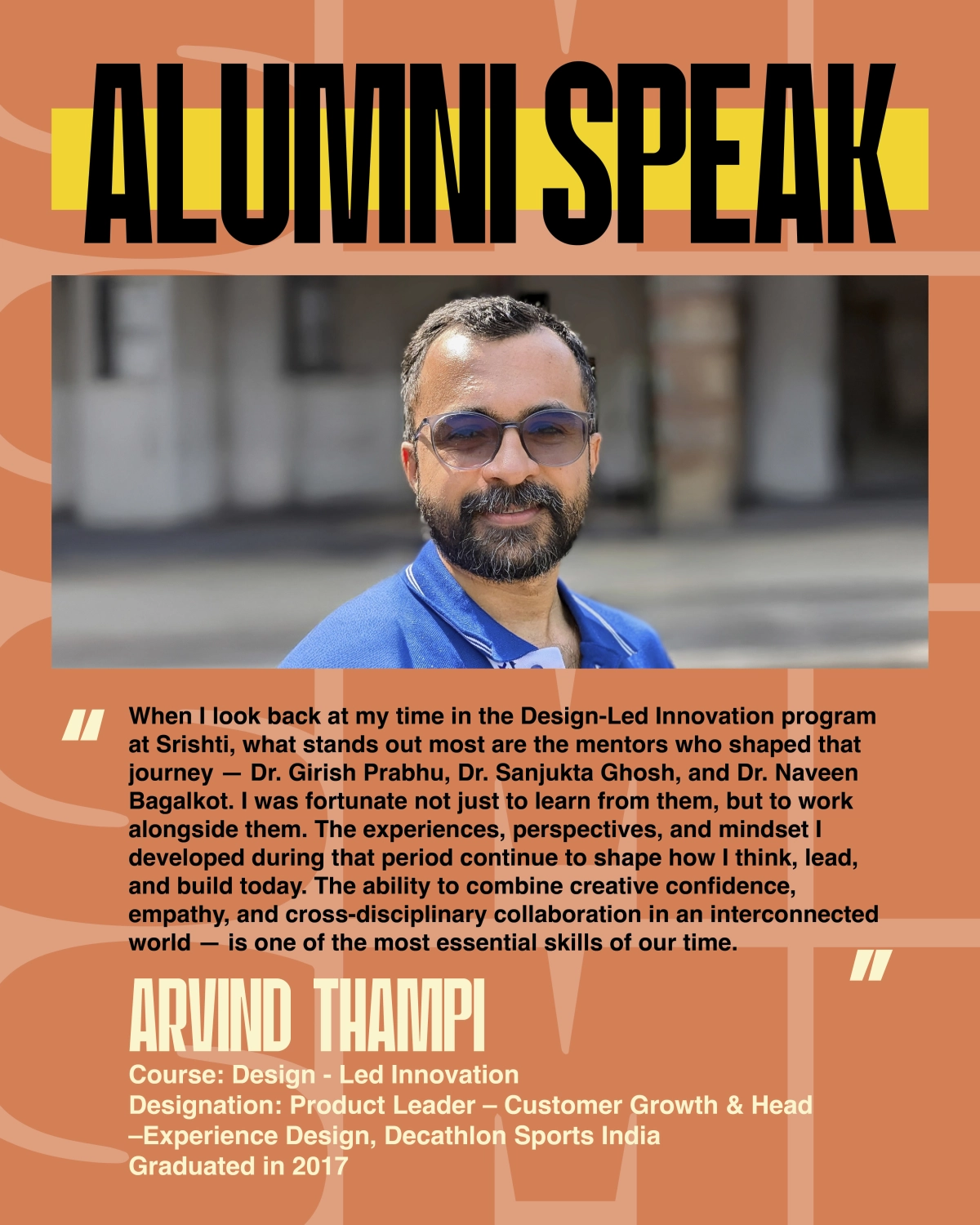
2-YEAR PG Professional Program

2-YEAR PG Professional Program

Design can drive innovation by making products, systems, and services more valuable for organisations and society alike, resulting in a sustainable advantage. The Postgraduate Program in Design Led Innovation aims to train innovators to apply their critical and creative thinking abilities to address a problem .
The Program is divided into three major semester wise phases. Semester One focuses on the phase of Idea Generation or Discovery which is the foundational semester for the program . In this phase the core units are designed to foster imagination through artistic inquiry and scientific experimentation . Semester Two focuses on Idea Exploration through well-defined boundary that can facilitate knowledge around strategic innovation . Semester Three focuses on Idea Implementation through a well-structured business model and detailed action plan . The learner should be able apply the learnings from all these three semester as part of the fourth and final semester Capstone project.
The program promotes transdisciplinary thinking through appropriate research methodology . Various qualitative and quantitative research methods are taught as part of the program. An individual is encouraged to conduct primary research to generate meaningful insights. This helps to develop innovative, sustainable interventions with entrepreneurial potential that can drive positive change in organizations and society. The program provides and facilitates an ecosystem which supports exposure to various cutting edge technology knowledge related to Computer Aided Design, Artificial Intelligence , Machine Learning , Internet of Things , Drone Technology etc. This fosters technological creativity that can lead to new product development .
Upon graduation, students can work as product developers, innovation consultants, design researchers, business designers, product managers, or system designers in various settings, such as design studios, research labs, government organisation, startups, academia, non-profit organizations, or social enterprises. Additionally, students can pursue a research-oriented career through a PhD program.
The vision of Postgraduate Program in Design Led Innovation is to create innovators with strategic and original thinking . One should be able to explore and apply the understanding from the creative world through deeper exploration of human behaviour, sociological phenomenon, political dynamics, environmental impact, business strategy and technological creativity.
This vision has evolved through critical understanding of multiple theories and frameworks proposed by academicians and practitioners. The inspiration for this program has drawn inspiration from various strategic design thinkers. Their philosophies were explored to develop the fundamental base for Design Led Innovation program. To name some of them are Tim Brown, David Kelley, Roger Martin , Jeanne Liedtka , Larry Leifer , Herbert Simon, Horst Rittel , Philip Kotler etc. The foundation of this program is also grounded on Systems and Complexity Theory by referring to the significant contribution by Ludwig von Bertalanffy and John Henry Holland respectively.
All these theoretical underpinning steered to the formation of a two years full time Masters of Design Program named as Design Led Innovation .
At Srishti Manipal Institute , Design-Led Innovation Program concentrates on innovative interventions in social and business spaces. The Program nurtures an individual to blend creativity with business strategy, focus on users and practice the craft of story telling . An individual should be able to collaborate across disciplines and solve complex problems . One should be able to bridge theory and practice and understand organisational dynamics .
LEVEL
Postgraduate Degree
AWARD
Masters of Design (M.Des)
DURATION
2 Years / Full-time
Disciplinary Studios
Seminars (Disciplinary Units)
Transdisciplinary Research Projects
Independent Study
Culminating Performances of Understanding (Portfolio, Transdisciplinary research, Projects, Colloquium, Capstone/Dissertation)
Knowledge Enhancement (ability or skills)
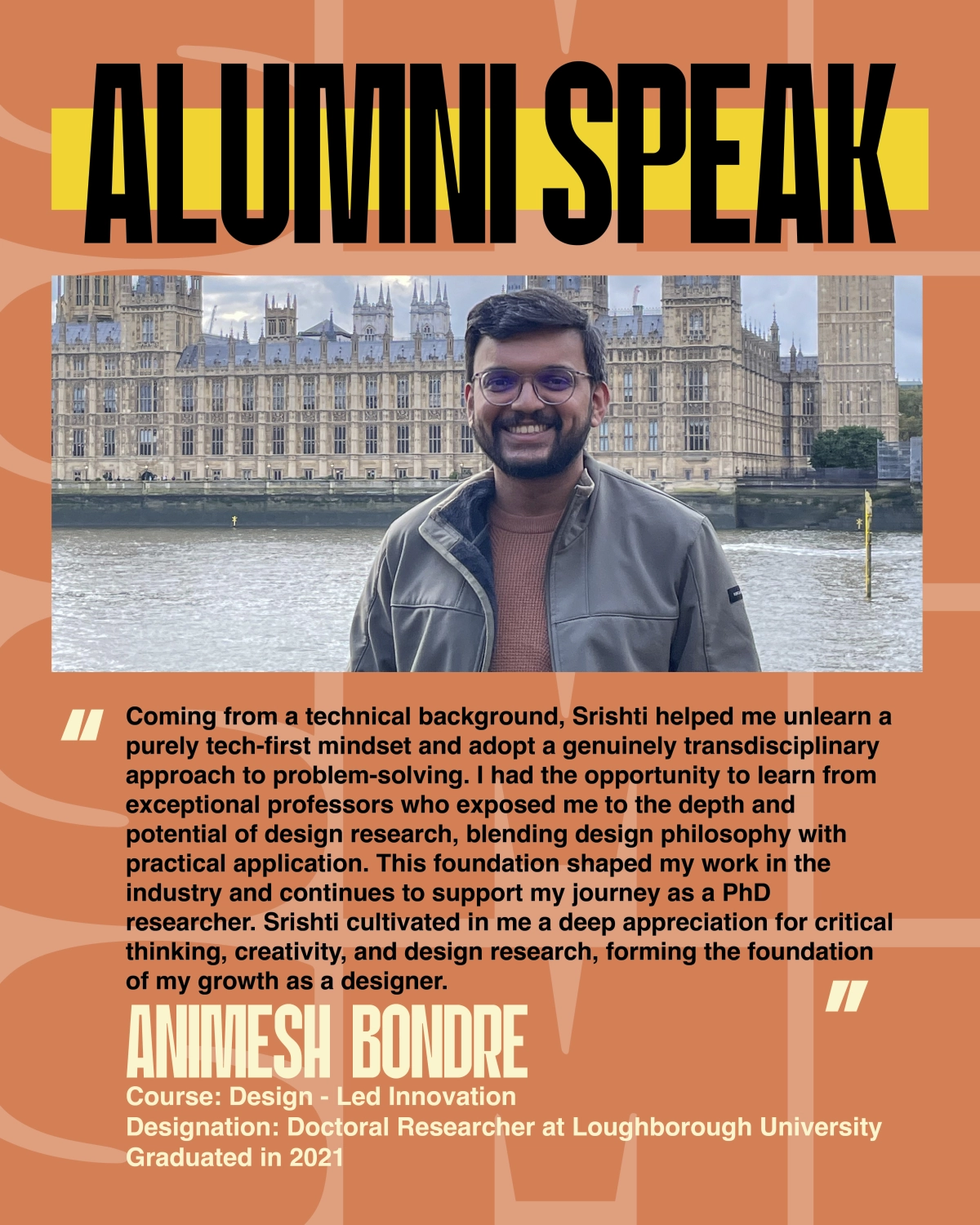
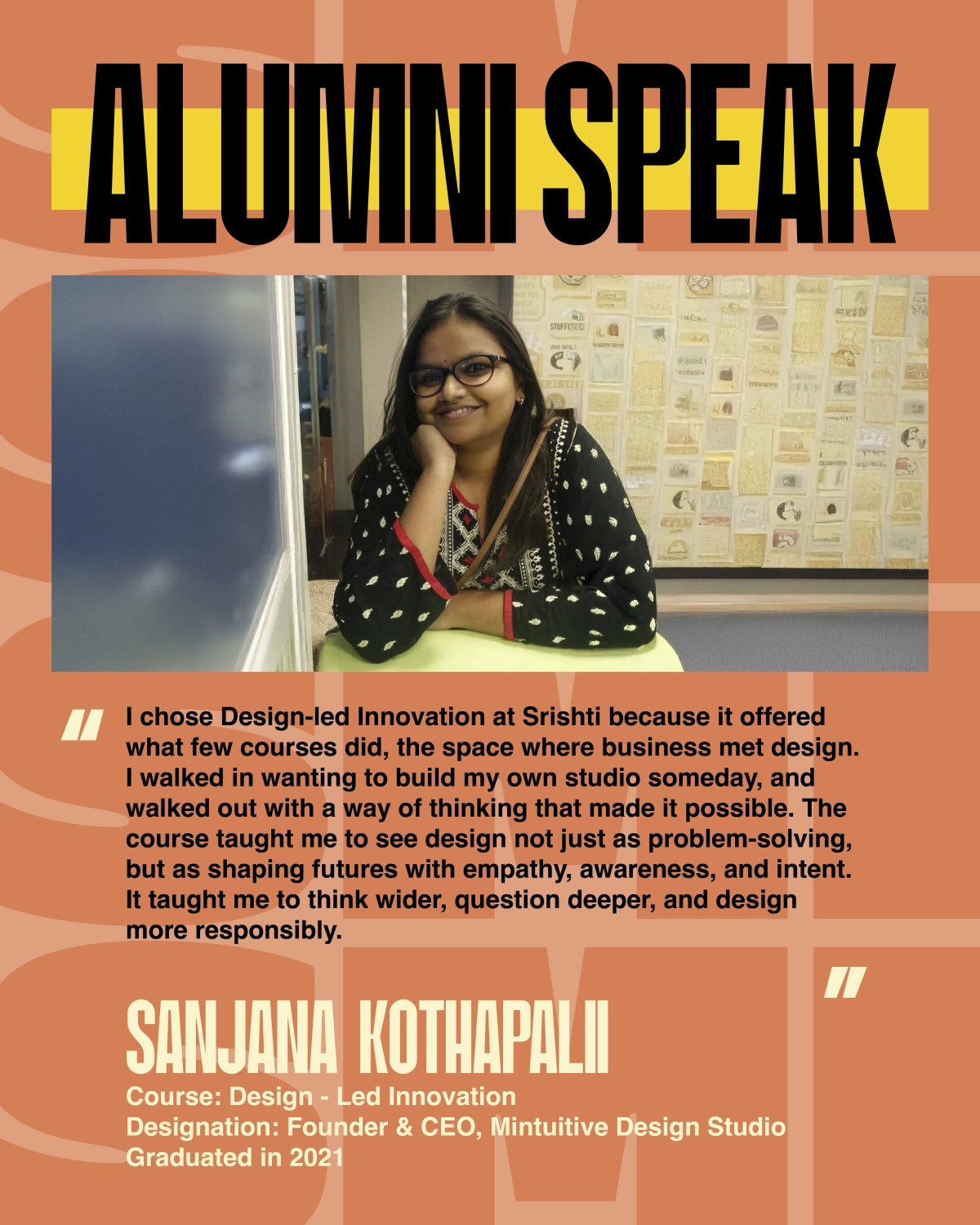
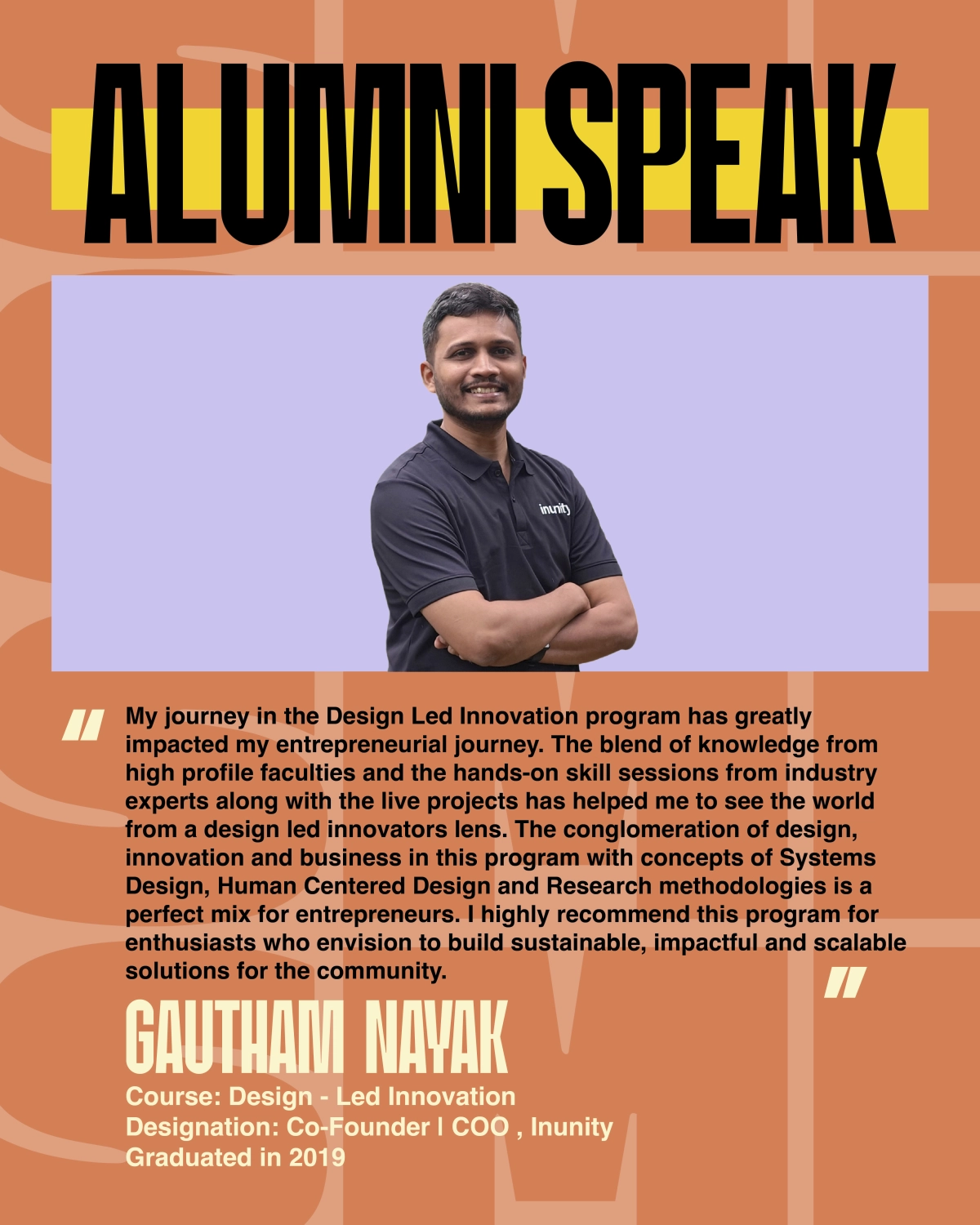
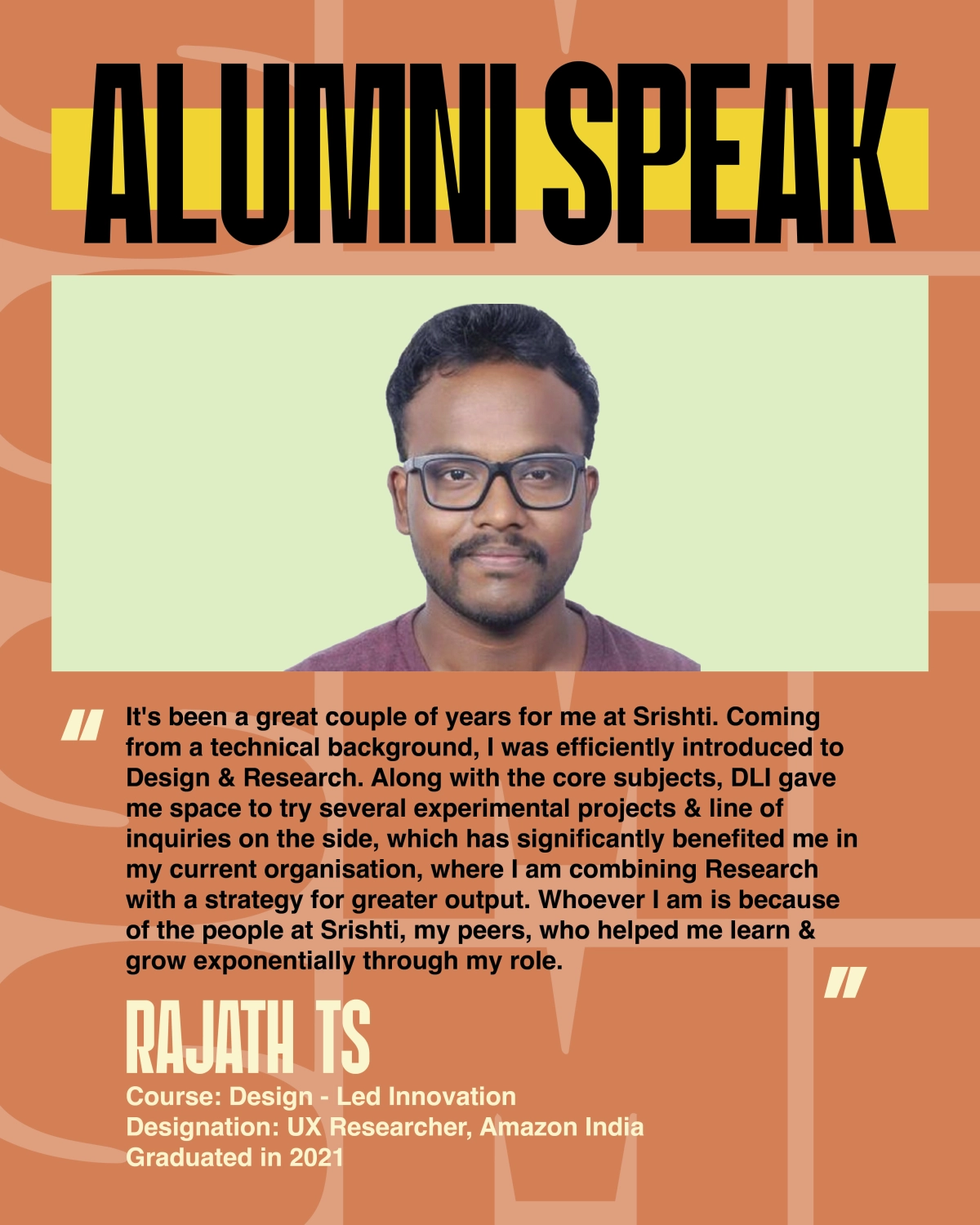
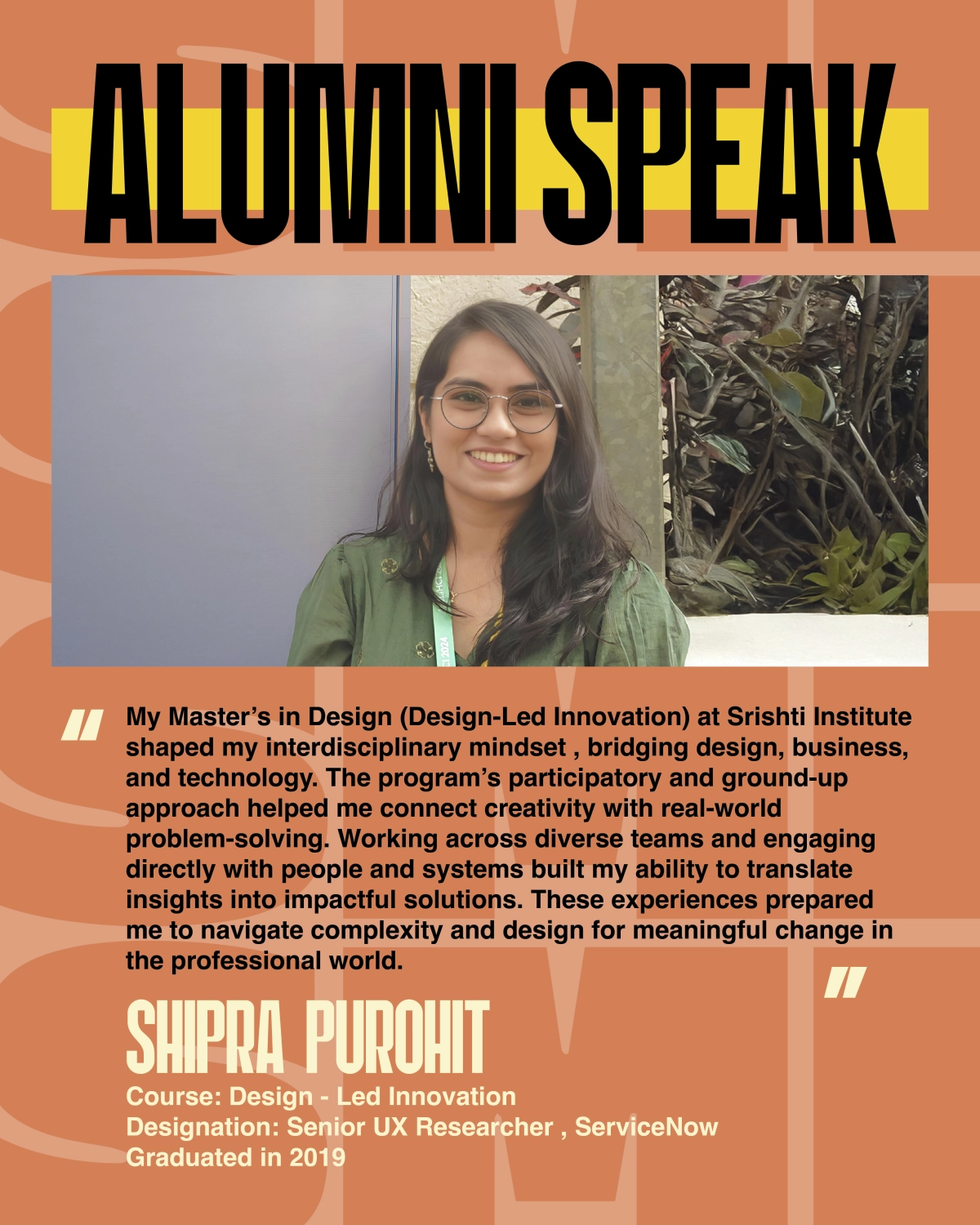
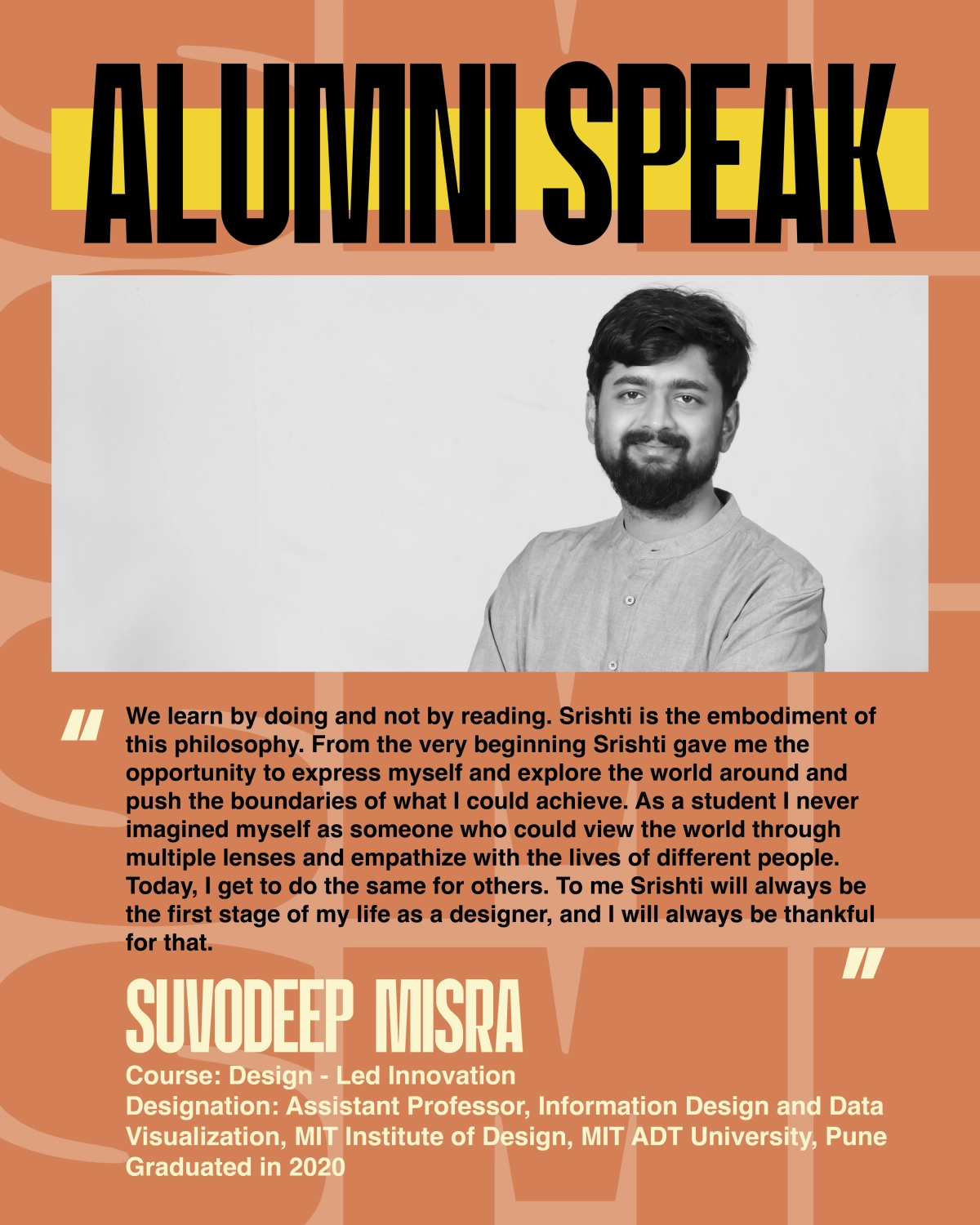
The above-mentioned capabilities equip and prepare the student for a wide range of opportunities across
Learning at the postgraduate level is driven by published lines of inquiries that is enacted through studio-based learning, workshops, theoretical reflections and field work. This approach cultivates a creative practice through engagement in diverse contexts, collaborative and participatory approaches leading to knowledge development.
Program learning components include:
Upon successful completion of the course, graduates will have the capabilities to:
For More information, please contact Professor Sajukta Ghosh at sanjukta.ghosh@manipal.edu